An ultrasound study of Mandarin fricatives and affricate consonants
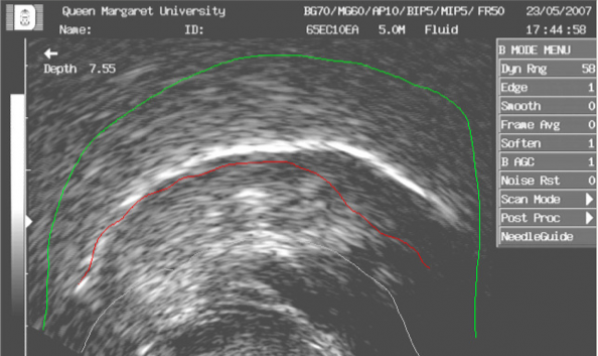
An ultrasound study of Mandarin fricatives and affricate consonants Xiu Ming & Didier Demolin Gipsa-Lab, Université de Grenoble, Alpes This presentation will describe the articulatory contrasts between alveolar, post-alveolar (retroflex), palatalized post-alveolar (alveo-palatal) fricative and affricate consonants in Mandarin using the utrasound technique. The aim is to compare tongue contours between the three sets of consonants (alveolar, post-alveolar, palatal and alveo-palatal) and to describe how they are articulated. The present state of the study study is based on recordings made with 3 Mandarin speakers using the following set of data (numbers indicate tones): Ladefoged and Maddieson (1996) mention that sounds like ’…[,] does not involve the tip of the tongue being curled up and backwards into the palatal region as in the Dravidian subapical retroflex stops, nor does it have the apical post-alveolar shape that occurs in the Hindi retroflex stops’. For Ladefoged and Maddieson this sound is produced with the upper surface of the tip of the tongue, making it a laminal rather than an apical post-alveolar. The data recorded in the present study seem to confirm these observations for fricatives. However, they also suggest that the strategies of Mandarin speakers to produce sounds likeare a bit more subtle. Indeed it seems that in this case the tongue is curled up but without involving a backward movement into the palatal region. References: Ladefoged and Maddieson (1996). The Sounds of the World’s Languages. Oxford. Blackwell.
收录时间:2020-02-06T10:11:41Z
使用资料正文
An ultrasound study of Mandarin fricatives and affricate consonants
Xiu Ming & Didier Demolin
Gipsa-Lab, Université de Grenoble, Alpes
This presentation will describe the articulatory contrasts between alveolar, post-alveolar (retroflex), palatalized post-alveolar (alveo-palatal) fricative and affricate consonants in Mandarin using the utrasound technique. The aim is to compare tongue contours between the three sets of consonants (alveolar, post-alveolar, palatal and alveo-palatal) and to describe how they are articulated. The present state of the study study is based on recordings made with 3 Mandarin speakers using the following set of data (numbers indicate tones):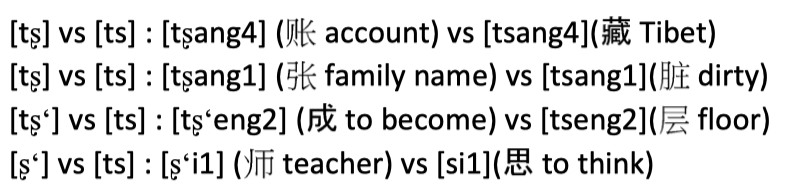
Ladefoged and Maddieson (1996) mention that sounds like ’…[,] does not involve the tip of the tongue being curled up and backwards into the palatal region as in the Dravidian subapical retroflex stops, nor does it have the apical post-alveolar shape that occurs in the Hindi retroflex stops’. For Ladefoged and Maddieson this sound is produced with the upper surface of the tip of the tongue, making it a laminal rather than an apical post-alveolar. The data recorded in the present study seem to confirm these observations for fricatives. However, they also suggest that the strategies of Mandarin speakers to produce sounds like are a bit more subtle. Indeed it seems that in this case the tongue is curled up but without involving a backward movement into the palatal region.
References:
Ladefoged and Maddieson (1996). The Sounds of the World’s Languages. Oxford. Blackwell.