A Comparison of Methods for Tongue Shape Analysis
A Comparison of Methods for Tongue Shape Analysis Katherine M. Dawson1, Douglas H. Whalen1, 2, Mark K. Tiede1, 2 1City University of New York, 2Haskins Laboratories There are many possible methods for analyzing tongue shape data obtained from ultrasound, with the choice usually driven by the research questions of the study. The aim of the present study is to meaningfully describe through the use of a quantification parameter the differences in complexity between tongue shapes from utterances of various types, and to test whether a useful range for such a complexity parameter can be captured by differing candidate methods for a normal population. The most promising methods can then be used in further work to index differences in tongue shape complexity between normal and clinical populations. Different analysis techniques will be applied to a restricted set of data, recorded from Québécois French speakers. Two of these techniques are based on Procrustes analysis (Goodall, 1991), and relate to deformation and rotation of the shape, and two are based on polynomial fitting (Stolar & Gick, 2013; Van Otterloo, 1988; Young, Walker, & Bowie, 1974). Results will be described in terms of how well the methods differentiate more complex tongue shapes (i.e. those with multiple inflections / extreme constrictions) from simpler ones. The analysis methods will also be compared with respect to their resilience to the limitations of ultrasound imaging, such as minor movements of the probe and data variability. The results of this study may also indicate modifications that can be made to existing methods for improved application to the analysis of tongue shape complexity. References Goodall, C. (1991). Procrustes methods in the statistical analysis of shape. Journal of the Royal Statistical Society, 53(2), 285-339. Stolar, S. & Gick, B. (2013). An index for quantifying tongue curvature. Canadian Acoustics, 41(1), 11-15. Van Otterloo, P.J. (1988). A contour-oriented approach to digital
收录时间:2020-02-06T09:20:20Z
使用资料正文
A Comparison of Methods for Tongue Shape Analysis
Katherine M. Dawson1, Douglas H. Whalen1, 2, Mark K. Tiede1, 2
1City University of New York, 2Haskins Laboratories
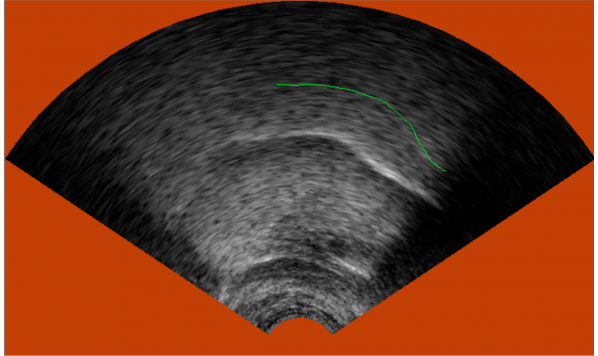
There are many possible methods for analyzing tongue shape data obtained from ultrasound, with the choice usually driven by the research questions of the study. The aim of the present study is to meaningfully describe through the use of a quantification parameter the differences in complexity between tongue shapes from utterances of various types, and to test whether a useful range for such a complexity parameter can be captured by differing candidate methods for a normal population. The most promising methods can then be used in further work to index differences in tongue shape complexity between normal and clinical populations.
Different analysis techniques will be applied to a restricted set of data, recorded from Québécois French speakers. Two of these techniques are based on Procrustes analysis (Goodall, 1991), and relate to deformation and rotation of the shape, and two are based on polynomial fitting (Stolar & Gick, 2013; Van Otterloo, 1988; Young, Walker, & Bowie, 1974).
Results will be described in terms of how well the methods differentiate more complex tongue shapes (i.e. those with multiple inflections / extreme constrictions) from simpler ones. The analysis methods will also be compared with respect to their resilience to the limitations of ultrasound imaging, such as minor movements of the probe and data variability. The results of this study may also indicate modifications that can be made to existing methods for improved application to the analysis of tongue shape complexity.
References
Goodall, C. (1991). Procrustes methods in the statistical analysis of shape. Journal of the Royal Statistical Society, 53(2), 285-339.
Stolar, S. & Gick, B. (2013). An index for quantifying tongue curvature. Canadian Acoustics, 41(1), 11-15. Van Otterloo, P.J. (1988). A contour-oriented approach to digital shape analysis (Doctoral Dissertation). Delft University of Technology, Delft, The Netherlands.
Young, I. T., Walker, J. E., & Bowie, J. E. (1974). An analysis technique for biological shape. I. Information and control, 25(4), 357-370.