立陶宛 TELEMED 超声扫描仪 MicrUs EXT-1H
MicrUs EXT-1H 是立陶宛 TELEMED UAB 的 USB 供电袖珍型 PC 架构黑白超声扫描仪,目前仍在售;由波束形成器、探头和电脑组成。 脉冲回波成像:探头发射超声并接收回波,波束形成器放大并数字化后经 USB 将数据送往电脑。 具备 B、M、复合与梯形模式;深度 2-31 cm;最高 120 fps;主机 106x105x21 mm、0.26 kg;USB 2.0/3.0。 用于心脏、胎儿、腹部、儿科、小器官、血管与肌骨检查,也用于言语研究。 标配:主机、手册、USB 线、电源与由客户选定的探头;Echo Wave II 与驱动免费下载。选配:additional 探头、活检支架、I/O 模块。 按电子线阵与凸阵扫描用于多用途检查;符合 IEC 60601-1,BF 型应用部分;探头出厂为非无菌。
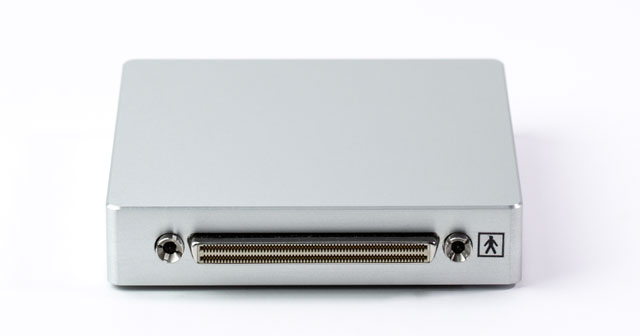
仪器信息
| 型号 | MicrUs EXT-1H |
|---|---|
| 分类 | 言语超声采集仪 |
| 仪器编码 | lithuania-telemed-ultrasound-scanner-micrus-ext-1h |
| 在售状态 | 在售 |
| 更新时间 | 2026-10-10 |
| 研究领域 | 语音学与言语科学、发音语音学 / 言语产生、社会语音学与语言变异、心理语言学、颅面与正畸临床研究 |
技术参数
共 87 条规格记录
| 系统构成 | 波束形成器(Beamformer)、超声探头(Ultrasound Transducer)、个人计算机(台式机/笔记本/平板)、+5V 电源 |
|---|---|
| 标准配置清单 | Beamformer;Operation manual;User guide;Software and manuals (eIFU);USB mini cable;Power supply (medical grade) XP Power VEP 15US05;Ultrasound transducer(类型与数量由客户确定) |
| 标准配置清单 | Micro system;Convex 2-4MHz, 20mm radius probe;AAA software;Pulse Stretch unit;Ultrafit probe stabilization headset;Audio Bundle(Articulate Instruments Micro 言语研究超声系统配置) |
| 可选附件配置 | Additional Transducers;Transducers Carrying Cases;PV-Biopsy Clip Bracket PV-type(用于微凸阵探头);Biopsy Clip Bracket C-type(用于凸阵探头);Biopsy Clip Bracket HL-type(用于线阵探头) |
| 可选探头型号 | C5-2R60S-3;L12-5L40S-3;L15-6L25S-3;MC8-4R20S-3 |
| 可选探头型号 | microconvex 5-10MHz 10mm radius;convex 4-8MHz 20mm radius;convex 2-4MHz 60mm radius(Articulate Instruments Micro 言语研究超声系统配置) |
| 唇部视频采集配置 | Headset camera bracket (front or side facing) with NTSC camera;Video capture card (USB2);Video/audio synchronisation unit(Articulate Instruments Micro 言语研究超声系统,配 UltraFit 头戴装置) |
| 测量原理 | 基于不同声阻抗组织界面的超声波反射:探头发射的超声波进入人体,经组织界面部分反射,回波返回探头后被检测、放大,以不同亮度的像素组合显示在监视器上形成超声图像 |
| 探头换能原理 | 压电换能器,以脉冲回波(pulse-echo)方式工作:电压波形经逆压电效应转换为声波发射,反射声波由同一探头接收并经正压电效应转换回电压波形 |
| 扫描方式 | 电子线阵、电子凸阵、电子微凸阵 |
| 成像模式 | B、B+B、4B、B+M、M、Compound、Trapezoid |
| 探头频率范围 | 2-4 MHz(MC4-2R20S-3 凸阵探头) |
| 探头频率范围 | 5-10 MHz(MC10-5R10S-3 微凸阵探头) |
| 探头曲率半径 | 20 mm(MC4-2R20S-3 凸阵探头) |
| 探头曲率半径 | 11 mm(MC10-5R10S-3 微凸阵探头) |
| 扫描深度 | 60-230 mm(MC4-2R20S-3 凸阵探头) |
| 扫描深度 | 30-150 mm(MC10-5R10S-3 微凸阵探头) |
| 扫描深度 | 2–31 cm(深度范围取决于探头类型与扫描仪型号) |
| 最大视场角 | 101°(半径 20 mm、2-4 MHz 凸阵探头) |
| 最大视场角 | 136°(半径 10 mm、5-10 MHz 微凸阵探头) |
| 帧率 | 最高 120 fps(Echo Wave II 全动态全尺寸实时超声成像;取决于所选扫描深度、扫描角度、聚焦模式、High Line Density 设置与计算机速度) |
| 帧率 | 最高 140 Hz(Articulate Instruments Micro 言语研究超声系统采集;典型 119 Hz(70 mm 深度、110° FOV、10 mm 探头),81 Hz(80 mm 深度、101.2° FOV、20 mm 探头)) |
| 灰阶数 | 256 |
| 彩色阶数 | 256 |
| 动态范围 | 120 dB,8 档 |
| TGC 控制范围 | 40 dB(5–10 个可自定义滑块) |
| 发射聚焦 | 可变,8 个聚焦区 |
| 接收聚焦 | 逐点动态聚焦 |
| 缩放范围 | 60%–600%(全部模式(Scan、Freeze、B、B+B、4B、M-zoom、cineloop 等)) |
| 观察区域可变档数 | 6 档(用于提高帧率) |
| 伽马控制曲线数 | 8 条固定曲线,8 条用户自定义曲线 |
| 结构改善算法 | PureView、NeatView、QuickView,各 8 种算法 |
| 电影回放帧数 | 数千帧(取决于计算机内存大小与扫描模式) |
| 原始扫描线数据记录 | 支持:记录原始超声扫描线数据而非插值图像数据(Articulate Instruments Micro 言语研究超声系统) |
| 成像声速常数 | 1540 m/s(测量准确度计算的通用假设) |
| 声速不确定度 | 5%(测量准确度计算的通用假设) |
| 测量显示分辨率 | 0.1 mm(距离与面积/周长测量) |
| 轴向距离测量准确度 | < ±5% 或 1 mm(2D 测量,范围 0.1–20 cm;体模法(ATS model 539,衰减 0.7 dB/cm-MHz);适用全部探头与模式) |
| 横向距离测量准确度 | < ±5% 或 1 mm(2D 测量,范围 0.1–20 cm;体模法;适用全部探头与模式) |
| 对角距离测量准确度 | < ±5% 或 1 mm(2D 测量,范围 0.1–20 cm;体模法;适用全部探头与模式) |
| 距离测量准确度 | < ±5% 或 1 mm(M 模式测量,范围 0.1–20 cm;体模法) |
| 面积测量准确度 | < ±4% 加满量程的 1%(2D Trace 与 Ellipse 测量,范围 0.1–1000 cm²;体模法;适用全部探头与模式) |
| 周长测量准确度 | < ±3% 加满量程的 1%(2D 测量,范围 0.1–70 cm;体模法;适用全部探头与模式) |
| 角度测量准确度 | < ±5%(2D 测量,范围 0–180°;体模法;适用全部探头与模式) |
| 容积测量准确度 | < ±9%(椭圆法(4.2.3 Perimeter, square and volume measurements by Ellipse method)) |
| 时间测量准确度 | < ±2% 加满量程的 1%(M 模式测量,范围 0.1–10 sec) |
| 心率测量准确度 | < +/- 2% + (满量程 × 心率/100)%(M 模式测量,范围 20–300 bpm) |
| 声输出指数 | MI 与 TI 均不超过 1.0(任何工作模式;因此系统不显示 MI/TI 输出指数) |
| 数据接口形式 | USB 2.0/3.0 |
| USB 端口供电参数 | 5 V,1.0 A(连接 USB 3.0 时由 USB 端口供电) |
| 硬件同步信号输出 | 每帧结束时输出 TTL 脉冲(Articulate Instruments Micro 言语研究超声系统,用于全自动音频同步) |
| 音频与图像同步精度 | 超声图像与言语音频毫秒级同步(Articulate Instruments Micro 言语研究超声系统,基于扫描仪产生的硬件脉冲流) |
| 电源输入电压 | 90-264 VAC(连接 USB 2.0 时,使用外接医用级交流电源) |
| 电源输入频率 | 47-63 Hz(连接 USB 2.0 时,使用外接医用级交流电源) |
| 配套超声成像软件 | Echo Wave II software |
| 配套言语分析软件 | Articulate Assistant Advanced (AAA),用于超声与视频的同步记录和分析(Articulate Instruments Micro 言语研究超声系统,单独购买) |
| 驱动程序包 | TELEMED Drivers Package |
| 软件插件 | 3DView;PanoView(选配,仅支持 32 位 Windows) |
| 开发者支持资源 | SDK 文档与示例代码(需另行协议获取) |
| 远程医疗功能 | LiveView;TeleView |
| 图像与视频存储格式 | AVI、JPG、BMP、PNG、TIFF、XLSX、DCM (DICOM uncompressed)、DCM (DICOM-JPEG RGB/YBR)、DCM (DICOM-JPEG RGB/YBR Video)、TPD (Telemed Picture Data)、TVD (Telemed Video Data) |
| 操作系统兼容性 | Windows® XP SP3、Windows® Vista SP2、Windows® 7(全部 32/64 位版本) |
| 计算机内存要求 | 1 Gb 及以上 |
| 外形尺寸 | 106 × 105 × 21 mm(宽×深×高) |
| 主机重量 | 0.26 kg |
| 安装场地面积要求 | 不小于 10 m²(专用超声扫描室,窗户需加遮挡以形成漫射照明) |
| 工作温度范围 | 10 - 40 °C |
| 工作相对湿度范围 | 不超过 85% |
| 工作大气压力范围 | 70 - 106 kPa |
| 储存温度范围 | 10 °C - 40 °C |
| 储存相对湿度范围 | 5-95%(非冷凝) |
| 安全标准 | IEC 60601-1: 2005, Part 1: General requirements for basic safety and essential performance |
| EMC 标准 | IEC 60601-1-2: 2007, Part 1, 2.Collateral standard: Electromagnetic compatibility - Requirements and tests |
| 超声暴露标准 | IEC 60601-2-37: 2007-08;NEMA UD 2-2004: 2003;NEMA UD 3-2004: 2004;AIUM MUS: 2002 |
| 电气安全分类 | 由 Class II 医用认证电源/充电器供电或 USB 3.0 供电;Type BF 应用部分 |
| 主机防护等级 | IPX0 |
| 探头防护等级 | IPX1 |
| 探头声窗防护等级 | IPX7 |
| 废弃电气电子设备指令符合性 | Directive 2002/96/EC Annex IV(设备上标有电气电子设备分类回收符号) |
| CE 符合性标志 | 设备 ID 标签上标有 CE mark,为制造商声明该部件符合欧盟相关指令与标准 |
| FDA 法规分类与编号 | K161968,法规 21 CFR 892.1560(Ultrasonic pulsed echo imaging system),管理类别 Class II,产品代码 IYO、ITX(注册设备名 MicrUs,覆盖 MicrUs EXT-1H) |
| 质量管理体系认证 | EN-ISO 13485:2016 |
| 其他国家与地区注册证书 | KFDA Certificate(证书载明型号 MicrUs EXT-1H) |
| 其他国家与地区注册证书 | Free Sale Certificate(覆盖 SmartUs、MicrUs、ArtUs、Echo Wave II) |
| 预期用途 | 用于心脏(成人与儿童)、胎儿、腹部、儿科、小器官、经阴道、外周血管与肌肉骨骼等多用途超声检查 |
| 使用禁忌 | 禁用于眼科用途或任何使声束穿过眼睛的应用 |
| 适用研究对象 | 典型与障碍言语的发音动态研究(Articulate Instruments Micro 言语研究超声系统) |
相关实验室
以下机构来自本仪器关联论文的作者署名,不代表已确认采购或持有该仪器。
兰卡斯特大学
地区:英国
署名作者:萨姆·柯卡姆
研究方向:言语运动控制、动力学模型、超声舌部成像、电磁发音仪
关联论文 1 篇
北卡罗来纳大学
地区:美国
署名作者:格里芬·洛瑞、劳拉·安妮·雅各克斯
研究方向:唇腭裂、正颌手术、超声舌位成像、腭咽闭合不全
关联论文 1 篇
曼彻斯特大学
地区:英国
署名作者:帕特里齐娅·斯特雷哈尔丘克
研究方向:言语运动控制、动力学模型、超声舌部成像、电磁发音仪
关联论文 1 篇
拉德堡德大学
地区:荷兰
署名作者:萨拉·伯格尔斯
研究方向:话轮转换、言语规划、发音准备、舌运动
关联论文 1 篇
蒂尔堡大学
地区:荷兰
署名作者:萨拉·伯格尔斯
研究方向:话轮转换、言语规划、发音准备、舌运动
关联论文 1 篇
马克斯·普朗克心理语言学研究所
地区:荷兰
署名作者:萨拉·伯格尔斯、斯蒂芬·C·莱文森
研究方向:话轮转换、言语规划、发音准备、舌运动
关联论文 1 篇
实验方法
研究方向:发音运动的超声舌位成像、超声与电磁发音仪的同步配准、舌运动学的动力学建模、卷舌音的发音实现与语音变化、会话轮替中的发音准备、唇腭裂患者正颌手术后的言语结局
高速超声舌位成像与电磁发音仪(EMA)同步采集及舌运动动力学参数估计
方法说明:使用 Telemed MicrUs 便携式超声仪(64 阵元、20 mm 半径、2 MHz 微凸探头,约 81 Hz 帧率)配合 Articulate Assistant Advanced(AAA)软件与 Carstens AG501 电磁发音仪同步采集英语元音发音数据。通过超声同步脉冲与 EMA 的 TTL 脉冲在 AAA 中实现帧级时间对齐,用 UltraFit 非金属头架固定探头并以 EMA 传感器追踪探头位移与旋转;随后用 DeepLabCut 追踪超声图像中的舌部解剖标志点,拟合线性谐振子模型,比较超声与 EMA 两种模态得到的动力学参数是否一致。
实验仪器:MicrUs 便携式超声扫描仪 MicrUs EXT-1H;64 阵元微凸超声探头 MC4-2R20S-3;AG501 电磁发音仪 AG501;Pulse Stretch 脉冲展宽单元;UltraFit 超声头架 UltraFit;Opus 55 全向头戴麦克风 Opus 55;m101 话筒前置放大器 m101;DAQ-2213 模数转换器 DAQ-2213;iO2 音频接口 iO2
实验步骤
- 硬件连接与同步设置
说明:将 Telemed MicrUs 超声仪、Articulate Instruments 脉冲展宽单元、AG501 EMA 和音频接口连接至 AAA 软件,EMA 的 TTL 同步脉冲作为额外音轨录入超声电脑。
关键点:超声纳秒级同步脉冲需经 Pulse Stretch 单元转换为毫秒级脉冲;EMA 脉冲在录音开始前 80 ms 拉低、每 4 ms 发送一次
- 探头固定与被试准备
说明:使用全塑料/非金属织物的 UltraFit 头架固定超声探头于下颌,被试贴附标准 EMA 传感器(舌尖、舌中、舌背、上下唇、下齿)及参考传感器(乳突、鼻梁、上切牙)。
关键点:头架必须非金属,否则会显著降低 EMA 位置估计精度;超声主机需放置在 EMA 磁场中心后方约 60 cm 处
- 语料录制
说明:6 名英格兰北部英语女性发音人朗读 'she says X'、'she says X dearly/eagerly' 或 'She said X (eagerly)' 载体句中的 bV/bVd 词,每块 58 个短语重复 4–5 次。
关键点:超声帧率约 81 Hz(80–100 Hz),EMA 1250 Hz;探头被重新定位的块须剔除
- 校准与探头运动验证
说明:用 circal 装置进行有/无超声设备两种条件下各 3 次 EMA 校准比较 Δz 与 σz;用 3D 打印三角形固定 3 个 EMA 传感器追踪探头的 x/y/z 位移与 roll/pitch/yaw 旋转。
关键点:σz 应低于 0.25 mm;探头平移与旋转需在 2–4 mm、5° 以内的 HOCUS 容差范围内
- 数据处理与动力学建模
说明:用 Montreal Forced Aligner 做强制对齐;用 AAA 内置 DeepLabCut 舌模型追踪 11 个舌部标志点及短腱、舌骨点,旋转至咬合平面;EMA 降采样至超声帧率,用 5 阶离散余弦变换平滑;以约束最小二乘拟合线性谐振子并用贝叶斯层级回归比较两模态参数。
关键点:超声信号噪声大,须平滑处理;EMA 传感器在超声图像中不可见,两模态位置点只能近似对应
实验数据
EMA 校准精度统计(Δz、σz)
数据来源:AG501 校准运行,有/无超声设备两种条件各 3 次
实验样本:无超声 Δz=0.661(0.086) mm、σz=0.148(0.025) mm;有超声 Δz=0.670(0.090) mm、σz=0.150(0.026) mm
数据呈现:条件对比表格
超声探头位移与旋转
数据来源:固定在 UltraFit 头架三角形上的 3 个 EMA 传感器坐标经 Kabsch 旋转矩阵算法计算
实验样本:平均平移 0.86–1.29 mm,平均旋转 0.58–0.71°,95% 区间最大 2.56 mm 与 1.41°
数据呈现:按发音人列出的标准差表格
舌标志点运动轨迹与谐振子参数(目标位置、刚度、阻尼)
数据来源:AAA-DeepLabCut 追踪的超声舌标志点坐标与同步 EMA 传感器坐标,共 1095 个词例
实验样本:线性谐振子模型对所有变量拟合 R² ≥ 0.90;目标参数在两模态间存在系统差异,刚度与阻尼变异程度相当
数据呈现:轨迹叠加图与参数后验分布图
方法关联论文:从超声舌部运动学估计动力学模型参数
社会语音学田野场景下的卷舌音超声舌位成像与声学联合分析
方法说明:在英格兰东兰开夏郡布莱克本市场的公众参与活动中,使用 Telemed MicrUs 超声仪(64 阵元、20 mm 半径探头,2 MHz,80 mm 深度,80–90 Hz 帧率)结合 AAA 软件与 UltraFit 塑料头架采集 24 名 8–73 岁被试朗读词表时的正中矢状面舌位图像与同步音频。经听觉编码、Fasttrack 共振峰提取与 GAMM 分析 F3−F2 轨迹,并用 AAA 内置 DeepLabCut 生成 11 点舌样条、旋转至咬合平面后做主成分分析,比较 core/caw、pour/paw 等最小对立对中听觉上有/无卷舌音发音人的舌形差异。
实验仪器:MicrUs 便携式超声扫描仪 MicrUs EXT-1H;64 阵元 20 mm 半径微凸超声探头 MC4-2R20S-3;UltraFit 塑料超声头架 UltraFit;USBPre 2 音频接口 USBPre 2;头戴式麦克风
实验步骤
- 被试招募与现场设置
说明:在布莱克本市场公众活动中录制 35 名参与者,分析其中 24 名长期居住东兰开夏的被试(14 女 10 男,8–73 岁)。
关键点:田野场景要求设备便携、低噪;社会变量(年龄、性别、族裔)需记录
- 词表呈现与录音
说明:在 AAA 软件中以文字加图片呈现 13 个词(9 个含韵尾 r 的词与 4 个干扰/最小对立词),要求朗读两遍。
关键点:部分被试因时间限制仅录一遍;NURSE 与 SQUARE 在兰开夏常合并
- 超声与音频采集
说明:Telemed MicrUs 系统将超声数据录入 AAA,探头由塑料头架固定,头戴麦克风经 Sound Devices USBPre2 以 22,050 Hz 录入笔记本。
关键点:探头 2 MHz、深度 80 mm、视野 90–100%,帧率 80–90 Hz
- 听觉编码与声学分析
说明:数据导出至 Praat 做听觉判定与元音(+卷舌)区间标注,用 Fasttrack 估计前三个共振峰,在 R 中以 GAMM 比较 F3−F2 轨迹。
关键点:以 F3−F2 作为卷舌音的声学指标;用 AR1 模型比较轨迹高度与形状
- 舌样条提取与统计
说明:TextGrid 导回 AAA 作为标志,用 DeepLabCut 在 11 个舌部关键点生成样条,按咬合板轨迹旋转到咬合平面,10 Hz Butterworth 低通平滑后做 PCA,并以线性混合模型检验 PC1。
关键点:取元音(+卷舌)区间 80% 处的舌形;PC1 解释 95% 方差
实验数据
卷舌音听觉编码比例
数据来源:24 名发音人 598 个词例的听觉判定
实验样本:1990 年后出生者大多非卷舌;年龄效应显著 χ²(1)=8.19, p=.004
数据呈现:按发音人与词的堆叠柱状图
F3−F2 共振峰距离轨迹
数据来源:Fasttrack 在元音(+卷舌)区间 11 个时间点提取,23 名发音人 394 个词例
实验样本:NORTH/FORCE 词轨迹高度差异 χ²(3)=26.7, p<.001;卷舌词例 F3−F2 更低
数据呈现:GAMM 拟合曲线图(按词汇集分面)
舌样条坐标与 PC1 得分
数据来源:AAA-DeepLabCut 在 11 个舌点生成的样条,16 名发音人 120 个词例
实验样本:卷舌发音人 core/pour 舌位比 caw/paw 更高更前;感知卷舌 × 最小对立交互 χ²(2)=23.6, p<.001
数据呈现:z 分数化舌样条叠加图、PC1 变异图与小提琴图
唇腭裂 III 类患者正颌手术前后舌运动的超声成像与言语评估
方法说明:使用 Telemed MicrUs EXT-1H 便携超声系统连接 MC4-2R20S-3 微凸探头(2.0–4.0 MHz),在 AAA 软件 221.4.1 版中以 100 fps、101.2° 视野、80 mm 深度实时记录舌运动,探头由 UltraFit 头架固定。对 5 名已修复唇腭裂的 III 类患者、5 名无唇腭裂的 III 类患者和 5 名 I 类对照在手术前后进行超声成像,计算舌背偏移指数(DEI)与舌约束位置指数(TCPI),同时用 PERCI-SARS 压力-流量评估腭咽功能并由言语语言病理学家进行感知评分,用线性混合效应模型检验术后变化。
实验仪器:MicrUs EXT-1H 便携式超声系统 MicrUs EXT-1H;微凸超声探头 MC4-2R20S-3;UltraFit 超声头架 UltraFit;PERCI-SARS 压力-流量言语气动评估系统 PERCI-SARS
实验步骤
- 被试分组与术前基线
说明:招募唇腭裂 III 类患者、非唇腭裂 III 类患者及 I 类对照各 5 名(15–25 岁),术前采集超声、压力-流量与感知数据。
关键点:对照组无手术,用于区分手术效应与组间固有差异
- 超声成像采集
说明:MicrUs EXT-1H 连接微凸探头 MC4-2R20S-3,经 UltraFit 头架固定于下颌,实时舌动图像录入 AAA 221.4.1。
关键点:参数:100 fps、视野 101.2°、深度 80 mm;探头位置需保持一致与稳定
- 舌形指数计算
说明:从超声舌轮廓中计算不同辅音(如 /k/ 在前/后元音前)的舌背偏移指数与舌约束位置指数。
关键点:指数反映舌背抬升幅度与舌体前后位置
- 腭咽功能与感知评估
说明:用 PERCI-SARS 压力-流量方法估计言语中的腭咽间隙,并由言语语言病理学家做定性感知评分。
关键点:腭咽闭合不全(VPI)以 /pi/ 等音节的压力-流量指标判断
- 术后随访与统计分析
说明:正颌手术后重复采集,用线性混合效应模型与自举法检验 DEI、TCPI 的术后变化(α=0.05)。
关键点:考虑辅音、组别与时间的交互及被试内变异
实验数据
舌背偏移指数(DEI)
数据来源:AAA 软件超声舌轮廓
实验样本:唇腭裂患者 /k/ 在前元音前的 DEI 显著低于对照(p=0.0099)
数据呈现:按组别、辅音与手术前后的箱线图/点图
舌约束位置指数(TCPI)
数据来源:AAA 软件超声舌轮廓
实验样本:唇腭裂患者各辅音的 TCPI 持续低于对照与非唇腭裂 III 类患者,存在个体内外变异
数据呈现:按辅音分面的组间比较图
压力-流量腭咽指标
数据来源:PERCI-SARS 系统
实验样本:术后 3 名患者中 2 名 /pi/ 表现出腭咽闭合不全
数据呈现:个体前后对比表格
方法关联论文:唇腭裂患者正颌手术后言语的舌部超声研究
会话轮替中发音准备的超声舌动测量(问答范式)
方法说明:使用 Telemed MicrUs EXT-1H 超声探头(帧率 91.65 fps,扇形图像 57×842 像素)配合 AAA 软件 217.01 版与探头稳定头架,记录 25 名荷兰语母语者在回答预录(伪装为现场提问)问答题时的舌运动。通过操控问题中关键信息出现的早晚(早规划 vs 晚规划)并以 Delta 技术计算相邻帧像素的欧氏距离量化舌动,分别以问题结束、关键词起点和回答起点为时间锁定点做基于簇的统计检验,考察言语规划是否延伸到发音准备阶段及其时间进程。
实验仪器:MicrUs EXT-1H 超声系统 MicrUs EXT-1H;超声探头稳定头架
实验步骤
- 被试与材料准备
说明:招募荷兰语母语者(最终 25 人,19–26 岁),编制早规划与晚规划两类预录问答题并设置现场提问的掩饰故事。
关键点:要求 5 秒内作答以保证反应速度;剔除录制质量差或犹豫过多者
- 超声与音频记录
说明:被试佩戴稳定头架将 MicrUs EXT-1H 探头置于下颌下,AAA 软件播放 wav 问题文件并同步记录超声与整段试次音频。
关键点:帧率 91.65 fps;超声、刺激播放与录音均在 AAA 中同步完成
- 舌动量化(Delta 技术)
说明:对原始超声图像逐帧计算相邻帧像素值之间的欧氏距离,得到整体舌运动强度时间序列。
关键点:无需提取舌轮廓即可获得连续运动量
- 时间锁定与统计分析
说明:分别以问题结束、关键词起点、回答起点为零点对齐舌动序列,采用基于簇的置换检验比较早/晚规划条件。
关键点:簇统计显著性阈值 p=.017
实验数据
回答反应时
数据来源:音频中回答起点相对问题结束的时间
实验样本:早规划平均 626 ms,晚规划平均 900 ms
数据呈现:条件均值柱状图
逐帧舌动 Delta 值时间序列
数据来源:MicrUs EXT-1H 超声图像经 Delta 技术计算
实验样本:规划可开始后至少 2 秒内两条件无差异;以回答起点对齐时最早在起点前约 2 秒出现条件差异
数据呈现:按条件的时间序列曲线图并标注显著簇
方法关联论文:问答序列中互动轮替的超声测量:发音准备被延迟但不与回答绑定
主要部件
暂未收录主要部件
相关论文
共 3 篇;当前显示第 1 页
问答序列中互动轮替的超声测量:发音准备被延迟但不与回答绑定
原文题名:Ultrasound measurements of interactive turn-taking in question-answer sequences: Articulatory preparation is delayed but not tied to the response
发表年份:2023
作者:萨拉·伯格尔斯;斯蒂芬·C·莱文森
刊源:PLOS ONE
DOI 10.1371/journal.pone.0276470查看论文摘要与书目信息
摘要 · 中文整理:已知会话轮替中的言语规划可与前一话轮重叠进行,研究表明它在前一话轮的要点明确时即已开始。本研究旨在考察规划是否一直进行到发音准备的最后阶段(即为回答的第一个音位摆好发音器官),以及该过程的时间进程。被试在回答预录的问答题(被误以为是现场提问)的同时用超声测量其舌运动。某些问题可较早开始规划(问题中途),另一些则较晚(仅在问题结束时)。结果显示,在早规划问题中规划可开始后的至少两秒内,两类问题的舌运动没有差异的证据,表明与当前话轮重叠的言语规划比无重叠时进行得更慢。另一方面,以言语起点为时间锁定时,两条件的舌运动在起点前最多两秒即出现差异。这表明发音准备可以提前进行,并不完全绑定于外显回答本身。
原文摘要:We know that speech planning in conversational turn-taking can happen in overlap with the previous turn and research suggests that it starts as soon as the gist of the previous turn becomes clear. The present study aimed to investigate whether planning proceeds all the way up to the last stage of articulatory preparation (i.e., putting the articulators in place for the first phoneme of the response) and what the timing of this process is. Participants answered pre-recorded quiz questions (being under the illusion that they were asked live), while their tongue movements were measured using ultrasound. Planning could start early for some quiz questions (i.e., midway during the question), but late for others (i.e., only at the end of the question). The results showed no evidence for a difference between tongue movements in these two types of questions for at least two seconds after planning could start in early-planning questions, suggesting that speech planning in overlap with the current turn proceeds more slowly than in the clear. On the other hand, when time-locking to speech onset, tongue movements differed between the two conditions from up to two seconds before this point. This suggests that articulatory preparation can occur in advance and is not fully tied to the overt response itself.
关键词:话轮转换、言语规划、发音准备、超声、舌运动
研究目标:考察会话轮替中的言语规划是否延伸至发音准备的最后阶段,以及在与当前话轮重叠时该过程的时间进程。
主要结论:早规划可一直进行到发音准备,但在与当前话轮重叠时进行得更慢、效率更低;发音准备可在言语起点前最多两秒出现,并不完全绑定于外显回答。
创新点:首次用超声舌位成像在互动问答范式中直接测量轮替过程中的发音准备;采用 Delta 技术无需舌轮廓提取即可量化整体舌动;以多个时间锁定点结合簇统计揭示规划时间进程。
后续建议:在真实双人互动而非预录问题中复现实验以提高生态效度;结合 EEG 或眼动同步测量以区分概念规划与发音准备阶段;分析特定舌部区域的运动而非整体 Delta 值;扩展到不同语言与不同回答首音位类型
APA 引文:Bögels, S., & Levinson, S. C. (2023). Ultrasound measurements of interactive turn-taking in question-answer sequences: Articulatory preparation is delayed but not tied to the response. PLOS ONE, 18(7), e0276470. https://doi.org/10.1371/journal.pone.0276470
仪器引用:A Micrus Ext-1H ultrasound probe (Telemed UAB) was used for the ultrasound measurements. It had a frame rate of 91.65 frames per second and produced a fan-shaped image of 57 by 842 pixels. Articulate Assistant Advanced software (AAA, version 217.01; Articulate Instruments) was used to play the recorded wav-files, record the ultrasound measurements, and record each entire trial.
使用资料与操作视频
Typical speech exemplar videos
简介:This video tutorial shows how to use the pre recorded video exemplars.As in the previous video,we will and select.An exemplar window by clicking on them or I can't button.It will always show the last exemplar that you had loaded.In this case.It was client specific exemplar.To load the prerecorded typical example,Our videos we click on the second button on the top,It will automatically show the video folder with a selection of videos.
发布时间:2020-02-14T11:09:53Z
Reward button
简介:This search tutorial video shows the use of the reward button,The reward button,is button with those wrapped present.Once you've completed a session,If you click this button and an animated GIF will appear on top of the outstanding display,It's randomly selected from a list of gifts and in a sub folder of the application folder.And it will be the gift will play for us as long as you and let it and to stop it playing.
发布时间:2020-02-14T10:17:36Z
Recalling client exemplar
简介:This small video shows how to use the Two Recall,An exemplar image for a client using the exemplar window for this possibly we don't need to have the prompt texts and the prompt window,So he can close those by clicking the buttons on the right hand side.But I've got a simple single display for the exemplar display.If we click on the dispily show,High example in a window.We'll get a second display here and not in the top.
发布时间:2020-02-14T09:14:14Z
Copy save
简介:This video tutorial shows how to use the exemplar window we can in life more click at the bottom right with a little clipboard,and the upside symbol to save the best effort by a client.So there we have clicked the button and it's immediately captured the image you can check the image to see whether it's suitable image to be stored.
发布时间:2020-02-14T07:55:40Z
Brightness and contrast
简介:This video shows how to adjust brightness and contrast and to find their controls for brightness and contrast.Click on the plus button at the bottom.This pops up a new set of buttons.If you click on the top one,Which is the outside settings button.It shows the brightness and contrast controls.If we slide the brightness,You can see goes dark too very light.If just contrast,Contrast,Increases or decreases.
发布时间:2020-02-14T07:11:11Z
Automatic palate trace
简介:In this tutorial,Video will show how to use the automatic palate trace function.Then open the mark overlay button.And if you click on that in this first Add palate,Symbol,You'll see these four extra symbols,And so we want to create a vocal tract.We'll click this first button.And then we need to say some sentences and for instance,Three young girls wore wool coats and boots in the car.And then we'll click on this third button to save it。
发布时间:2020-02-14T06:11:26Z
Image analysis tutorial 7 How to measure lip protrusion
简介:in the previous video we measured the lip distance along in this first vertical spline and I would quite like to measure the protrusion as well so we've selected this second chart here we'll add edit the analysis values and then we're going to create a new one and this is going to be and this again is going to be a 2d spline this time we just want to measure the position of this upper lip spline along in this measure
发布时间:2020-02-14T03:52:52Z
Automatic palate advanced
简介:This is short tutorial,Showing some more advanced features of the automatic palate tracing again clicking of the left button and again we can click the Create vocal tract button and we start Recording.Vocal track palate there.Sometimes you might get parts of the palate that extend beyond the region.
发布时间:2020-02-14T03:49:56Z
Image analysis tutorial 6 How to measure lip distance
简介:so now that we've added the template to lots of recordings I'll show you how we can actually make some measurements so if we go to a recording where I've already and applied the lip splines you can see they're moving through here if I just show you quickly three-headed splines
发布时间:2020-02-14T03:09:37Z
Add palate
简介:This is to tell you about adding an overlay or marker symbols.Press click the button on the second button down on the right.It will open up the mark window,We get selection of buttons,There look at Add palate choice,So click the first button,We can add a simple,Movable curve.Clicking the first button and you just click and drag the end points or the middle point.
发布时间:2020-02-14T02:50:22Z
Image analysis tutorial 5 Tools and methods for fitting 2D splines to lips
简介:this video shows some ways of manipulating moving the splines around changing the color so if we then go into headaches blinds in the splines itself we can select these and make the lines thicker for both lips and we can change the color as well and perhaps make not -for this your blue okay within the keyframes
发布时间:2020-02-14T02:45:23Z
Tutorial 10- Customizing the User Interface
简介:Hi and welcome to tutorial ten.Today we are going to be looking at the design feature of AAA to access design.You must right click on the top bar and click design.The design feature allows you to modify the layout of AAA into any preference which you wish.All of the current tabs along the top are presets,Which can be modified using the design function.Or you can create your own.
发布时间:2020-02-13T13:13:32Z
Tutorial 9- Batch Processing Splines
简介:And welcome to tutorial nine Batch Processing of splines.If you have not yet seen the tutorial on splines and other spline editing,Please see previous tutorial on it.So today we are going to set up splines for batch processing.As usual.We can go into the Edit splines dialogue to bring up,And similarly to how it is shown in the previous tutorial,We will go through that process.We will use the defaults which gives us these splines.
发布时间:2020-02-13T11:23:28Z
Tutorial 8- EPG and Formant Analyses in Publisher
简介:Hi and welcome to tutorial eight,This tutorial details the use of EPG data in publisher and also briefly looks at the use of wave data.This tutorial is a follow on from tutorial six,Which discusses the basics and the use of supplying data in publisher.It is recommended that you see that tutorial first.If you have not yet already.The graph that I have in front of me here is made from wave data.
发布时间:2020-02-13T10:09:01Z
Tutorial 7- Recording Ultrasound Data (Legacy)
简介:You ready to make a recording need to check that you've got the right line of text selected and a little of this one here,And then you got a clear image in the ultrasound window who just after speaker to say Ah,Ah,Can you say cat cat cat?We're already pressed the record button and then a screener again,And then our speaker will say the word.OK,Are you ready?
发布时间:2020-02-13T08:08:55Z
Tutorial 6- Publisher
简介:Publisher,Which is a tool that will allow you to export your data in a graphical format suitable for putting into documents and presentations.So to begin with,Publisher can be accessed in a number of different ways.The most simple is that it is under the file menu and publisher.You can import data from the track and you can also import it from the edit splines dialogue and the spline workspace.The spline workspace,You can import data using the button copy to publisher to do this.
发布时间:2020-02-13T06:44:44Z
Tutorial 5- The Spline Workspace
简介:This is tutorial five today we will be looking at the spline workspace.The spline workspace is a tool available in the software to allow you to manipulate splines you have placed and prepare them for publishing in scientific documents.The spline workspace is not available from the tabs at the top to open it,You have to right click the ultrasonic or video image,and click spline workspace.At the moment we can see that the workspace is empty.
发布时间:2020-02-13T03:54:19Z
Tutorial 3- Annotations and Splines
简介:And welcome to tutorial three.Today we will be looking at putting annotations on audio and putting spines on your ultrasonix images.So right now we are looking at the tab,Analyze Ultrasonix or Echo B.We had selected the data previously in the record Ultrasonixs ,Or Echo B tab.We are using the same demo data in this tutorial as we used in the previous.
发布时间:2020-02-13T01:36:00Z
Tutorial 4- Exporting data
简介:And welcome to tutorial four.Today we are going to look at how to export data in the two main ways.We will be using today the same data set as we had used in the previous tutorials.Both forms of exporting data that I will talk about today can be found under file in the top bar and export.The first we will look at is export files.This is a powerful tool to allow you to export your data in bulk from all your clients and recordings at once for import into other software.
发布时间:2020-02-12T11:31:12Z
Tutorial 2- User interface
简介:And welcome to tutorial too.Basic user interface,Today,I will show you the basics of the UI.When you first start up the software,You will get this loading screen,Just wait while it loads and it will take you into the main window of the software.When you first start,The window should look something like this for the purposes of this tutorial,We'll have a demo file loaded.
发布时间:2020-02-12T07:29:58Z
Tutorial 1- Installing and Uninstalling
简介:Hello and welcome to the setup tutorial.This tutorial covers how to install the software for articulate assistant advanced.There are two ways to install the software.First is from the CD,Which contains the files seen in this window.Another is to download the executable file from the Web Address Articulate Instruments.com as seen here.For installation,Please ensure that you have administrative privileges before beginning.We will now begin.
发布时间:2020-02-12T05:20:28Z
Image analysis tutorial 4 Apply a 2D spline template to many selected recordings
简介:in the previous video we created ascaled template with two fiducials and two lip splines it would be convenient to be able to apply the template to all of the recordings in your session without having to open each one and add it manually
发布时间:2020-02-12T03:04:49Z
Image analysis tutorial 3 Create scaled template and apply it to a new recording
简介:one final thing that we need to do with the scaling is to then reapply that scale to the template
发布时间:2020-02-12T02:45:08Z
Image analysis tutorial 2 Scaling 2D splines so they measure in mm
简介:in this video we'll talk about scaling to real work coordinates um it's not absolutely necessary to do this but for your data to make sense you probably want all of the splines in the image to have an appropriate real-world scale
发布时间:2020-02-12T02:25:40Z
Image analysis tutorial 1 Initial fitting of splines to video image
简介:this is a video to show how to add splines to a video image camera video image
发布时间:2020-02-12T02:02:32Z
Automatic palate tracing
简介:Automatic palate tracing
发布时间:2020-02-07T05:49:13Z
A single speaker study of Modern Greek:The effect of stress, syllable position and consonantal context on vowels, and of vowel context on intervocalic consonants
简介:This pilot study uses ultrasound tongue imaging (UTI) to investigate these topics from an articulatory perspective. The speaker is the 2 nd author. We are aware of just one other UTI study on Greek, which studies the relative timing of consonants in clusters (Yip, 2012).
发布时间:2020-02-07T03:43:54Z
Ultrax: Vocal Tract Imaging for Speech Therapy and Research
简介:The Ultrax project (http://www.ultrax-speech.org) is a three-year project, funded by the EPSRC Healthcare Partnerships programme, which aims to use ultrasound to provide real-time visual feedback of lingual articulation. The ultimate aim is to exploit ultrasound to track tongue movement, while a simplified, diagrammatic vocal tract is displayed to the user as a realtime animation
发布时间:2020-02-07T03:30:46Z
A New Head-Probe Stabilization Device for synchronized Ultrasound and Electromagnetic Articulography recordings
简介:In this contribution,we will present and discuss a series of tests performed by means of a Toshiba Aplio XV ultrasound equipment and both the AG500 and the new AG501 electromagnetic articulographs by Carstens Medizinelektronik GmbH. Provided that the headset is absolutely transparent to the EMA operation, the aim of the tests is to show that the helmet and the ultrasound probe do not significantly move over the subject, resulting in reliable ultrasound tongue images......
发布时间:2020-02-07T03:08:41Z
Factors affecting the articulatory and acoustic characteristics of vowels in clear speech
简介:The purpose of this study was twofold: to examine the specific articulatory processes of clear speech for individual vowels using ultrasound, and to provide a more comprehensive investigation of the factors affecting the production of clear speech. In particular, we investigated how the type of listener (hard of hearing vs. normal hearing) and the lexical properties of words (frequency and phonological neighborhood density) interact.
发布时间:2020-02-07T02:47:43Z
Many-to-one articulatory-acoustic mappings in Canadian French vowels
简介:Many-to-one articulatory-acoustic mappings in Canadian French vowels
发布时间:2020-02-07T02:28:46Z
Comparing the effect of pronunciation and ultrasound trainings to pronunciation training only for the improvement of the production of the French /y/-/u/ contrast by four Japanese learners of
简介:Comparing the effect of pronunciation and ultrasound trainings to pronunciation training only for the improvement of the production of the French /y/-/u/ contrast by four Japanese learners of French
发布时间:2020-02-07T02:06:44Z
An ultrasound study of oral and nasal central vowels in Brazilian Portuguese
简介:This s study aims at characterizing, by means of ultras sound techniques and acoustic analysis, the d differences in tongue position between the centraal oral and nasal vowels in syllable stressed d position and the central vowel in stressed and unstressed positions in Brazilian Portuguuese (BP). It is also concerned with approaching g its findings with the results of BP vowel desc criptions based on cine-radiographic data, acoustic analysis, MRI (Demolin & Medeiros, 2006; Gregioo,2006), and US.
发布时间:2020-02-07T01:47:31Z
The articulation of Scottish Gaelic plain and palatalized consonants
简介:Scottish Gaelic exhibits a rich system of consonant mutation, which is mostly governed by its morphology. For instance, the initial consonant [p] of a SG word bàta ‘boat’ changes to [v] when the word undergoes morphological inflection – e.g., a bhàta ‘his boat’, in which bh is pronounced as [v]. Although consonant mutation in SG is well documented (Macaulay, Ladefoged et al. , Gillies, Stewart ), there is only one experimental, quantitative study on this to date (Archangeli et al. (2011)).
发布时间:2020-02-06T10:30:10Z
Velar coarticulation and tongue twisters in people who stutter 1: Fluent Utterances
简介:The goal of the study is to determine whether there is evidence for differences in the speech production process for people with stuttering even during fluent and otherwise normal sounding utterances.
发布时间:2020-02-06T10:16:55Z
An ultrasound study of Mandarin fricatives and affricate consonants
简介:This presentation will describe the articulatory contrasts between alveolar, post-alveolar, palatalized post-alveolar fricative and affricate consonants in Mandarin using the utrasound technique. The aim is to compare tongue contours between the three sets of consonants (alveolar, post-alveolar, palatal and alveo-palatal) and to describe how they are articulated. The present state of the study study is based on recordings made with 3 Mandarin speakers using the following set of data.
发布时间:2020-02-06T10:11:41Z
An Exploratory Ultrasound Investigation of Emphatic Articulation in Cairene Arabic
简介:This study presents an exploratory quantitative investigation of emphatic articulation, employing Smoothing Spline Analysis of Variance (SS-ANOVA; Davidson, 2006) to statistically evaluate the differences in position between individual sections of the tongue during the articulation of plain and emphatic consonants.
发布时间:2020-02-06T09:49:29Z
Quantitative analysis of ultrasound data collected with and without head stabilisation
简介:The aim of the present study is to explore the applicability of quantitative measurements of stabilisation-free tongue movement data, by comparing ultrasound data collected with and without head stabilisation. The stabilisation device used in the study is a headset holding the transducer (Articulate Instruments Ltd 2008).
发布时间:2020-02-06T09:33:11Z
A Comparison of Methods for Tongue Shape Analysis
简介:The aim of the present study is to meaningfully describe through the use of a quantification parameter the differences in complexity between tongue shapes from utterances of various types, and to test whether a useful range for such a complexity parameter can be captured by differing candidate methods for a normal population. The most promising methods can then be used in further work to index differences in tongue shape complexity between normal and clinical populations.
发布时间:2020-02-06T09:20:20Z
Probe Skewing Effects & Kinect Head-tracking in Tongue Contour Imaging
简介:The position of the ultrasound probe in relation to the position of the head of the subject (the tilt of the head or probe) may affect the quality and comparability of ultrasound tongue images, compromising the interpretability of the data.
发布时间:2020-02-06T08:59:25Z
Segment Constants and Speaker Constants in English Coronal Obstruents
简介:This paper examines the articulation of the coronal obstruents /t, s, θ, tʃ, ʃ/. Previous studies have found that there is variation in the production of coronals (Dart, 1991; Delattre & Freeman, 1968; Reichard et al., 2012; Stone et al., 2012). These studies examined single segments (/r/, /s/). We compared segments with different places and manners of articulation, with the aim of isolating the articulatory correlates of the various coronal places in English.
发布时间:2020-02-06T08:41:30Z
Ultrasound images in the new ‘iPA Phonetics’ App
简介:iPA Phonetics is an application that illustrates the sounds and articulations of an expanded version of the IPA chart. The App gives users of Apple iOS mobile electronic devices the ability to access and compare and, through matching ‘games,’ to test their knowledge of phonetic symbols and sounds together with their visual production correlates, including video of the oral vocal tract, video of the laryngeal vocal tract, and ultrasound of the laryngeal vocal tract.
发布时间:2020-02-06T08:13:13Z
Statistical analysis of tongue shape in ultrasound video sequences: tongue tracking and population analysis
简介:In this study, we developed and evaluated a set of automated and semi-automated image processing tools for the statistical analysis of tongue shape, as seen in the midsagittal view on 2D ultrasound video sequences. It is known that tongue shape and motion, though highly non-rigid, are also highly constrained: most speech patterns can be explained by a few degrees of freedom.
发布时间:2020-02-06T07:33:56Z
Capturing, Analyzing, and Transmitting Intangible Cultural Heritage with the i-Treasures Project
简介:The i-Treasures project, which officially began on 1 February 2013, is a 12-partner FP7 project that proposes to use multi-sensor technology to capture, preserve, and transmit four types of intangible cultural heritage, referred to as ‘use cases’: rare traditional songs, rare dance interactions, traditional craftsmanship and contemporary music composition. Methodologies used will include body and gesture recognition, vocal tract modeling, speech processing and electroencephalography (EEG).
发布时间:2020-02-06T06:54:26Z
Can seeing help you hear? Acoustic vs. Ultrasound information in the diagnosis of speech sound disorders associated with cleft palate
简介:Many studies investigating speech characteristics in cleft palate (CP) have been based on perceptual analysis. In most cases, phonetic transcription is deemed to be gold standard in diagnosing speech sound disorders associated with cleft palate (Sell 2005). Due to the heterogeneity and complexity of CP, atypical and compensatory articulations may not be identified through phonetic transcription alone.
发布时间:2020-02-06T06:41:32Z
Retroflex versus bunched /r/ in ultrasound intervention: One shape does not fit all?
简介:Errors in speech sound production can have a negative impact on children’s development across academic, social, and psycho-emotional domains. While most children go on to attain age-appropriate speech production, an estimated 30% of English-speaking children with a history of speech sound disorder continue to misproduce rhotic sounds at 9 years of age, and 9% still show these errors from 1218 years and beyond (Lewis & Shriberg, 1994).
发布时间:2020-02-06T06:29:35Z
The Japanese unrounded back vowel /ɯ/ is in fact rounded central/front [ʉ - ʏ]
简介:This study reports on an ultrasound and video recording investigation of the so-called unrounded back vowel /!/ in Standard Japanese (SJ henceforth), as in /!ɕiɾo/ ‘back’, based on our hypothesis that /!/ is underlyingly a rounded central vowel with lip protrusion and the more appropriate phonemic IPA symbol is /ʉ/. As it turns out, the tongue position of SJ /!/ was closer to that of the front vowel /e/ than the back vowel /o/ by 6 of the 7 native SJ speaking participants.
发布时间:2020-02-06T06:14:18Z
/s/ in Italian-Tyrolean bilingual speakers
简介:This paper presents an exploratory UTI-based study on articulatory patterns for /s/C(C) clusters in Italian. More specifically, it focuses on word-initial and word-internal /s/-stop-(liquid) sequences as produced by four Italian/Tyrolean simultaneous and sequential bilingual speakers. The main aim of this research is to establish if the articulatory patterns for /s/ in Italian vary according to the nature and degree of bilingualism of the speaker.
发布时间:2020-02-06T04:11:22Z
What happens as listeners become speakers during face-to-face conversation?
简介:Approaching talk-in-interaction as an integrated system of body movement and vocalization, we collected simultaneous ultrasound and external video (Fig. 1) of eight participants’ face-to-face conversations with the first author. Focusing on inter-turn intervals as well as the period immediately following the start of a turn, we sought to ascertain if there were regular patterns among body movements as well as tongue postures,swallowing, and inhalation once speech had begun.
发布时间:2020-02-06T03:49:34Z
An Ultrasound Study of the Acquisition of North American English /ɹ/
简介:An Ultrasound Study of the Acquisition of North American English /ɹ/
发布时间:2020-02-06T03:41:13Z
An ultrasound study of retroflex and alveolar laterals in Kannada
简介:An ultrasound study of retroflex and alveolar laterals in Kannada
发布时间:2020-02-06T03:23:57Z
Morphological effects on the darkness of English intervocalic /l/
简介:Morphological effects on the darkness of English intervocalic /l/
发布时间:2020-02-06T03:02:46Z
Ultrasound+corpus study of phonetically-motivated variation in North American French and English
简介:This presentation reports two projects employing ultrasound imaging to augment conversational speech corpora of French from Gatineau, Quebec, and English from Raleigh, North Carolina. Targeted articulatory data are collected in order to study phonetically-motivated sound changes in progress. While phonetically-motivated change from below is a fundamental concept in contemporary approaches to phonology and variation, empirical data is sparse (Cedergren, 1973; Trudgill, 1974; Labov, 2001)。
发布时间:2020-02-06T02:40:52Z
Kaytetye consonant contrasts without contours
简介:Two of the benefits of articulatory research using ultrasound technology are (a) the relative immediacy of access to visual information and (b) the portability of many ultrasound devices. Both points make ultrasound imaging an attractive option for field researchers interested in documenting lingual movement in remote locations.
发布时间:2020-02-06T02:16:23Z
Very High Frame Rate Ultrasound Tongue Imaging
简介:This paper examines the trade-off between temporal and spatial resolution in ultrasound tongue images at fast frame rates. The fastest lingual speech movements are investigated using a variety of echo pulse densities. Benefits and drawbacks of using higher frame rates are considered. Faster frame rates reduce distortion of the shape of the tongue during highly dynamic segments but it becomes increasingly difficult to discern the detail of that shape.
发布时间:2020-02-05T10:17:16Z
Predicting tongue shapes from a few landmark locations
简介:We present a method for predicting the midsagittal tongue contour from the locations of a few landmarks (metal pellets) on the tongue surface, as used in articulatory databases such as MOCHA and the Wisconsin XRDB. Our method learns a mapping using ground-truth tongue contours derived from ultrasound data and drastically improves over spline interpolation.
发布时间:2020-02-05T09:06:45Z
F1/F2 TARGETS FOR FINNISH SINGLE VS. DOUBLE VOWELS
简介:This paper explores the reason why Finnish single (short) vowels tend to occupy less peripheral positions in the F1/F2 vowel space compared to their double (long) counterparts. The results of two production studies suggest that the less extreme vowel quality of single vowels is best described as arising from undershoot of articulatory/acoustic targets due to their short durations, assuming single, context-free targets for phonemes.
发布时间:2020-02-05T07:41:36Z
AN ULTRASOUND PROTOCOL FOR COMPARING TONGUE CONTOURS: UPRIGHT VS SUPINE
简介:A study is described that employs ultrasound to measure the effects of gravity on production of vowels. The materials are designed to encourage consistent production over repetitions. A recording and analysis protocol is described which allows for correction for probe movement or rejection of data where correction is not possible. Results indicate a slight superior and posterior displacement of the tongue root in supine posture, consistent with a shift in the support structure of the tongue.
发布时间:2020-02-05T06:19:31Z
An Edinburgh Speech Production Facility
简介:The EPSRC‐funded Edinburgh Speech Production Facility is designed for the collection of synchronized articulatory and acoustic data during dialogue. It will be open to the international research community for funded use as of September 2010. As part of the EPSRC project, we recorded a corpus of dialogue sessions (8 are planned, 6 are recorded to date). The transcribed corpus will be available in 2010. We briefly describe the facility setup, and our recorded corpus.
发布时间:2020-02-05T05:38:43Z
英国 AI 言语超声采集仪 Micro Speech,AAA软件教程1:安装和卸载
简介:介绍英国 AI 言语超声采集仪 Micro Speech的配套软件AAA软件的安装和卸载。
发布时间:2020-01-10T09:38:08Z